Summer EBT (SUN Bucks) 2026: $120 per child, who got it, and which states opted out
Summer EBT paid $120 per school-age child in 2026 ($162-$252 in Alaska, $189 in Hawaii). Who qualifies, automatic vs application, every state's status, summer 2027.
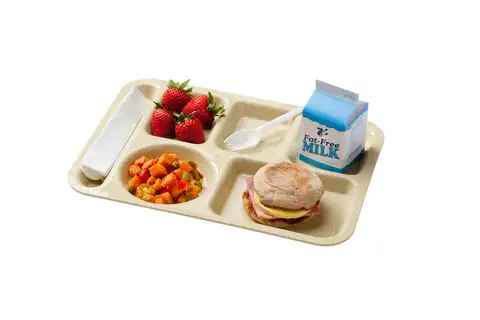
Summer EBT, which many states call SUN Bucks, paid $120 per eligible school-age child for summer 2026 in the 48 contiguous states and the District of Columbia. Alaska’s levels were $162 to $252, Hawaii’s $189, and the territories’ $180 (USDA notice on 2026 benefit levels, April 22, 2026). Thirty-eight states, DC, four territories and five tribal nations in Oklahoma were marked as participating in 2026, and USDA’s map shows the U.S. Virgin Islands as planning to take part. Twelve states did not: Alaska, Florida, Georgia, Idaho, Indiana, Mississippi, Oklahoma (the state itself), South Carolina, South Dakota, Tennessee, Texas and Utah (USDA, Summer EBT Participating Areas, checked October 17, 2026). Children in families on SNAP, TANF or FDPIR, and children approved for free or reduced-price school meals, were mostly enrolled without applying. Other families with income up to 185% of the poverty line could apply.
Summer EBT is a separate program from SNAP, and you do not need SNAP to get it.
What Summer EBT is
Summer EBT is a federal grocery benefit for school-age children when school is out. It replaces some of the school meals children miss over the summer. The money goes onto an EBT card and buys food at stores that take SNAP (USDA Summer EBT page, updated July 22, 2026).
It is a standing federal program, run every summer since 2024 under section 13A of the Richard B. Russell National School Lunch Act (42 U.S.C. 1762, as USDA cites it). The law set the first benefit, in 2024, at $40 per child for each summer month. USDA adjusts it every January for food prices, rounding down to the whole dollar. The summer total is the monthly amount times three (2026 benefit levels notice). The rules states must follow are in 7 CFR part 292.
Each state chooses whether to take part, and runs its own version. Names differ: SUN Bucks (Alabama, California, Ohio and many others), Summer EBT or S-EBT (New York, Michigan, Oregon), SuN Bucks (Missouri). USDA notes that the program “may be known by a different name in your location” (USDA Summer EBT page).
How much each child got in 2026
The 2026 levels apply from January 1 to December 31, 2026. In the contiguous states, food prices rose only 0.49% in the year to November 2025, so the amount stayed at $40 a month, rounded down from $40.82 (USDA notice, April 22, 2026).
| Where the child lives | 2025 total | 2026 monthly level | 2026 total per child |
|---|---|---|---|
| 48 states and DC (and tribal programs in those states) | $120 | $40 | $120 |
| Alaska, urban | $156 | $54 | $162 |
| Alaska, Rural I | $198 | $69 | $207 |
| Alaska, Rural II | $243 | $84 | $252 |
| Hawaii | $177 | $63 | $189 |
| Guam, American Samoa, Puerto Rico, U.S. Virgin Islands, Northern Mariana Islands | $177 | $60 | $180 |
Alaska did not run Summer EBT in 2026, so its levels applied to nobody that summer. Most states paid the whole summer at once. Federal rules let a state pay in one issuance or several, as long as the first arrives before summer starts (7 CFR 292.15(f)).
Who qualifies
A child qualifies in one of two ways (7 CFR 292.6):
- School-age and in a household on SNAP, TANF or FDPIR (or another means-tested program USDA approves for the state; Maryland, for example, also counts Medicaid). Foster, homeless, migrant, runaway and Head Start children also count as eligible this way.
- Enrolled in a school that offers the National School Lunch Program or School Breakfast Program, with household income low enough for free or reduced-price meals.
“School-age” means the ages of compulsory schooling under your state’s law, so the exact ages differ by state. Kansas, for example, uses 7 to 17 for automatic enrollment through Food Assistance or TANF (Kansas DCF SUN Bucks page).
A child who did not attend a school in the lunch or breakfast program during the school year cannot qualify by application. A home-schooled child can still qualify through the first route, if the household is on SNAP, TANF or FDPIR (7 CFR 292.12(e)(3)).
The income limit: 185% of poverty
Applications are judged against USDA’s reduced-price school meal limits, 185% of the 2026 federal poverty guidelines. These limits apply from July 1, 2026 to June 30, 2027 (USDA Income Eligibility Guidelines notice, April 9, 2026). The notice prints the table as an image. The figures below are from the California Department of Education’s copy, and each matches the arithmetic: the HHS guideline times 1.85, rounded up.
| Household size | Yearly income limit | Monthly income limit |
|---|---|---|
| 1 | $29,526 | $2,461 |
| 2 | $40,034 | $3,337 |
| 3 | $50,542 | $4,212 |
| 4 | $61,050 | $5,088 |
| 5 | $71,558 | $5,964 |
| 6 | $82,066 | $6,839 |
| 7 | $92,574 | $7,715 |
| 8 | $103,082 | $8,591 |
| Each additional person | +$10,508 | +$876 |
These are for the 48 contiguous states, DC, Guam and the territories. Alaska and Hawaii have higher limits. Income here means gross income before taxes and deductions.
This limit is well above SNAP’s. A family of four can have gross income up to $3,575 a month for SNAP in FY2027 (130% of poverty, see SNAP income limits), but up to $5,088 a month for Summer EBT. Many families who earn too much for SNAP still qualify.
Immigration status
USDA’s July 10, 2025 notice on “federal public benefits” lists Summer EBT among the programs it keeps running under 8 U.S.C. 1615. That section says federal law neither bars nor requires states to provide these child nutrition benefits to children who are not citizens or qualified immigrants (USDA notice). Summer EBT is not covered by the 2025 SNAP immigrant rules described in SNAP eligibility for immigrants. Maryland, for example, says all children who meet the income rules are eligible “regardless of their immigration status” (Maryland SUN Bucks). Check your state’s page for its own policy.
How families get it: automatic or by application
Automatic enrollment. States must enroll, without an application, children who were certified for free or reduced-price meals and school-age children in SNAP households. They also enroll TANF, FDPIR, foster, homeless, migrant, runaway and Head Start children when the state has that data. The state must send a written notice saying no application is needed and explaining how to opt out (7 CFR 292.12(d) and (f)). Maryland, for example, says a child at a Community Eligibility Provision school (everyone eats free) is not enrolled automatically unless the family also gets SNAP, TCA or Medicaid, or the child is in foster care (Maryland SUN Bucks). Other states handle this differently, so check your state’s page.
Application. Every participating state must offer a statewide application. A paper version must exist if the state also takes applications online. A complete application needs the names of the children and household members, each person’s income (amount, source and how often), and an adult’s signature. If you get SNAP or another approved program, you can give your case number instead of listing everyone’s income. The state cannot require pay stubs when you apply, though it may check income later. It must send an approval or denial within 15 operational days of a complete application. A denial must explain how to appeal (7 CFR 292.12 and 292.13).
Deadline. Under federal rules, you can apply until the last day of the state’s summer period. Applications that arrive later are used for the next summer (7 CFR 292.13(g)). Each state sets its own summer period. DC’s 2026 online application closed August 23, 2026, and paper applications received from August 24 count for summer 2027 (DC SUN Bucks).
Which card. The state decides. Some add Summer EBT to the family’s existing SNAP card. Others mail a separate card, sometimes one per child (USDA Summer EBT household page). When the money is on a SNAP card, the card spends Summer EBT first, before SNAP (7 CFR 292.15(i)). New cards go by first-class mail. The PIN comes separately, or you choose one. Oregon tells families to keep the card, because the next summer’s benefit can be loaded onto it faster (Oregon ODHS Summer EBT).
Timing. For children enrolled automatically or approved before summer, the money must be available 7 to 14 days before the state’s summer period starts (7 CFR 292.15(c)). Families who apply after summer starts must have the money available within 15 operational days of a complete application, for the full summer amount (7 CFR 292.15(c) and (f)).
If you moved. Apply in the state where your child finished the school year. If two states both pay your child, you may use only the benefits from that state (7 CFR 292.12(f)(4) and 292.13(l)).
Where Summer EBT ran in 2026
USDA’s map marks these programs as participating in 2026 (the U.S. Virgin Islands row is explained below the table). The program names and links are those USDA gives on each state’s page (USDA Participating Areas, checked October 17, 2026). Your state’s page on this site covers its SNAP rules.
| State | Program name | Official Summer EBT page |
|---|---|---|
| Alabama | Alabama SUN Bucks | alabama-sunbucks.com |
| Arizona | SUN Bucks | azed.gov/SUNBucks |
| Arkansas | Arkansas Summer EBT | Arkansas DHS |
| California | California SUN Bucks | CDSS |
| Colorado | Colorado Summer EBT | CDHS |
| Connecticut | Summer EBT | CT DSS |
| Delaware | Summer EBT | USDA’s Delaware page |
| District of Columbia | DC SUN Bucks | sunbucks.dc.gov |
| Hawaii | SUN Bucks Hawaii | sunbucks.dhs.hawaii.gov |
| Illinois | Illinois Summer EBT | IDHS |
| Iowa | Iowa SUN Bucks | Iowa HHS |
| Kansas | SUN Bucks | Kansas DCF |
| Kentucky | Kentucky Summer EBT | CHFS |
| Louisiana | Louisiana SUN Bucks | Louisiana DCFS |
| Maine | SUN Bucks | Maine DHHS |
| Maryland | Maryland SUN Bucks | Maryland DHS |
| Massachusetts | Summer EBT | Mass.gov |
| Michigan | Michigan Summer EBT | MDHHS |
| Minnesota | Minnesota Summer EBT | DCYF |
| Missouri | Missouri SuN Bucks | Missouri DSS |
| Montana | Montana SUN Bucks | DPHHS |
| Nebraska | Nebraska Summer EBT | Nebraska DHHS |
| Nevada | Nevada Summer EBT | Nevada DWSS |
| New Hampshire | Summer EBT | NH DHHS |
| New Jersey | NJ Summer EBT | nj.gov/summerebt |
| New Mexico | Summer EBT | USDA’s New Mexico page |
| New York | NY Summer EBT | OTDA |
| North Carolina | NC SUN Bucks | NCDHHS |
| North Dakota | North Dakota Summer EBT | ndsummerebt.nd.gov |
| Ohio | Ohio SUN Bucks | sebt.ohio.gov |
| Oregon | Oregon Summer EBT | ODHS |
| Pennsylvania | Summer EBT (SUN Bucks) | PA DHS |
| Rhode Island | Rhode Island SUN Bucks | RI DHS |
| Vermont | Vermont Summer EBT | summerebt.vermont.gov |
| Virginia | Virginia SUN Bucks | virginiasunbucks.com |
| Washington | Washington SUN Bucks | DSHS |
| West Virginia | WV Summer EBT | WVDE |
| Wisconsin | Wisconsin Summer EBT | DHS |
| Wyoming | Wyoming SUN Bucks | DFS |
| Guam | Summer EBT | USDA’s Guam page |
| U.S. Virgin Islands | Summer EBT (map: plans to participate) | USDA’s USVI page |
USDA’s map marks the U.S. Virgin Islands “Plans to Participate”, while its page for the territory says Summer EBT is available and gives a hotline, 340-772-7120. Puerto Rico, American Samoa and the Northern Mariana Islands are marked as participating. USDA’s pages for them give a phone number or email address but no website (Puerto Rico, American Samoa, Northern Mariana Islands).
States that did not take part in 2026
USDA lists twelve states as not participating in 2026: Alaska, Florida, Georgia, Idaho, Indiana, Mississippi, Oklahoma, South Carolina, South Dakota, Tennessee, Texas and Utah. Children in these states did not get the federal summer grocery benefit from the state, even if the family gets SNAP (USDA Participating Areas).
Two exceptions:
- Oklahoma tribal nations. The Cherokee Nation, Chickasaw Nation, Choctaw Nation of Oklahoma, Muscogee (Creek) Nation and Otoe-Missouria Tribe are listed by USDA as issuing Summer EBT “to all eligible children residing on Tribal land, regardless of Tribal membership.” Contact the tribe: Cherokee Nation, Chickasaw Nation, Choctaw Nation, and oksebt.org for the Muscogee (Creek) Nation and the Otoe-Missouria Tribe (links from USDA’s Oklahoma page). On USDA’s 2026 map, Oklahoma is the only state with tribal programs listed.
- Tennessee’s own benefit. Tennessee runs a separate state program, the Tennessee Summer Nutrition Initiative (TDHS Policy 24.31). It is not Summer EBT. The 2025 version paid a one-time $120 per child, with no application, to SNAP and Families First households in 15 counties with five or fewer summer meal sites. The 2026 details are on the Tennessee page.
Where Summer EBT is not offered, children can still eat free at Summer Food Service Program sites at schools, parks and other places. In some rural areas they can take meals to go (USDA Summer EBT household page).
Using the benefit, and when it expires
Summer EBT buys the same groceries as SNAP: fruits and vegetables, meat, poultry and fish, dairy, bread and cereal, snack foods and non-alcoholic drinks. It cannot buy hot foods, pet food, cleaning or household supplies, hygiene items or medicine (USDA Summer EBT household page). Grocery stores, farmers markets, convenience stores and online retailers that accept SNAP generally accept it. Find them with the SNAP Retailer Locator.
Summer EBT expires 122 days after it is issued. The state must warn you at least 30 days before. Expired benefits cannot be restored (7 CFR 292.15(h)). Benefits paid in June 2026 expire in October 2026. Oregon, for example, says 2026 balances started expiring October 3, 2026 (Oregon ODHS). If your child’s money arrived late in the summer, check the balance and spend it before its own 122-day date.
Lost or stolen card. Report it to the number on your state’s Summer EBT page. The state must put a hold on the account when you report it. It must mail or hand over a replacement within two business days, and it is responsible for money taken after your report (7 CFR 292.15(g)(4)). For card safety in general, see EBT skimming and stolen benefits.
Denied or paid the wrong amount. You can ask for a fair hearing through your state’s Summer EBT agency. You can first ask for an informal conference, which does not affect your right to a hearing (7 CFR 292.12(h)). A denial notice must also say that you can reapply at any time.
Worked examples for 2026
Family of four, two children in public school, not on SNAP, in Ohio. Gross income is $4,900 a month. That is above SNAP’s $3,575 limit for four people, but below the Summer EBT limit of $5,088. If the children were not approved for free or reduced-price meals, the family applies. Benefit: 2 children × $120 = $240.
Single parent in Hawaii on SNAP, three school-age children. The children are enrolled automatically through SNAP. Benefit: 3 × $189 = $567, issued under Hawaii’s levels.
Family in Texas on SNAP, two children. Texas did not take part in 2026. Benefit: $0 from Summer EBT. The children can still get free meals at summer meal sites.
Summer 2027: what is known
Under federal rules, a state had to tell USDA by August 15, 2026 that it plans to run Summer EBT in summer 2027. Its final plan is due February 15, 2027 (7 CFR 292.8). On October 17, 2026, USDA’s map still showed the 2026 list. It had not posted a 2027 list.
The 2027 benefit amount will be set in a USDA notice for January 1 to December 31, 2027, based on food prices in the year to November 2026. Kansas says the amount “will be announced in January of each year” (Kansas DCF).
Some states already accept applications for summer 2027:
- Kansas takes 2027 applications in its Self-Service Portal until 5 p.m. on August 31, 2027. Families enrolled automatically get a letter after January 2027 (Kansas DCF).
- Oregon has accepted paper applications for 2027 since September 2, 2026, by email to [email protected], and says Summer EBT returns in spring 2027 (Oregon ODHS).
- DC processes paper applications received from August 24, 2026 for summer 2027. The online application reopens in spring 2027 (DC SUN Bucks).
In any participating state, an application filed after the 2026 deadline counts toward the next summer under the federal rule. If you are on SNAP, keep your address up to date with your SNAP office, because automatic enrollment uses your case records. If you got a separate Summer EBT card, keep it.
Sources
- USDA Food and Nutrition Administration, Summer EBT, page updated July 22, 2026.
- USDA FNA, Summer EBT Household, page updated July 22, 2026.
- USDA FNA, Summer EBT Participating Areas and the state pages linked from it, checked October 17, 2026.
- USDA FNA, Summer Electronic Benefits Transfer for Children Program: 2026 Benefit Levels, Federal Register notice, April 22, 2026.
- USDA FNA, Child Nutrition Programs: Income Eligibility Guidelines (2026-2027), Federal Register notice, April 9, 2026 (Federal Register).
- California Department of Education, Income Eligibility Scales for School Year 2026-27, last reviewed April 24, 2026.
- USDA FNA, PRWORA: Interpretation of “Federal Public Benefit”, Federal Register notice, July 10, 2025.
- 7 CFR part 292, Summer Electronic Benefits Transfer Program, eCFR, checked October 17, 2026.
- Kansas Department for Children and Families, SUN Bucks.
- Oregon Department of Human Services, Summer EBT.
- District of Columbia, DC SUN Bucks.
- Maryland Department of Human Services, SUN Bucks.