WIC and SNAP: who qualifies, getting both, and the SNAP shortcut into WIC
WIC vs SNAP for 2026-2027: who each program serves, income limits, why a SNAP approval makes you income-eligible for WIC, and how to use both cards.
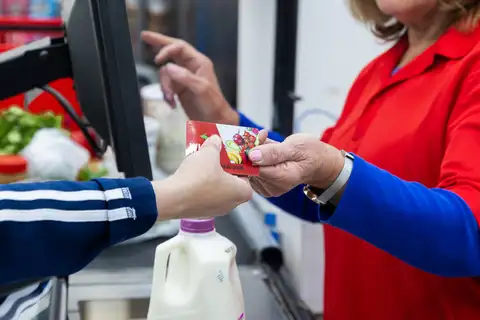
Yes, you can get WIC and SNAP at the same time, and many families do. Federal law calls WIC “supplementary to” SNAP: one does not replace or reduce the other (42 U.S.C. 1786(c)(1)). Being on SNAP also gives you a shortcut into WIC. A WIC office must accept you as income-eligible if you show you are certified for SNAP, so it does not check your income against WIC’s limit (7 CFR 246.7(d)(2)(vi)). You still have to be in a group WIC serves (pregnant, recently pregnant or breastfeeding, an infant, or a child under 5), live in the state, and pass a short health and nutrition check at the WIC office. The two programs are run by different offices, use different cards and buy different things, so you apply for each one separately.
WIC and SNAP side by side
| SNAP | WIC | |
|---|---|---|
| Who it serves | Low-income households of any age and makeup | Pregnant women, women up to 6 months after a pregnancy ends, breastfeeding women up to the baby’s first birthday, infants, and children up to their 5th birthday |
| Who runs it locally | Your state’s SNAP agency (often a human services department) | A local WIC agency, usually part of the state or county health department |
| Income test, 2026-2027 | Gross limit of 130% of poverty under federal rules; most states raise it, up to 200%, for most households; see SNAP income limits | 185% of poverty, or automatic if you get SNAP, Medicaid or TANF |
| Other tests | Assets in some states, work rules, citizenship and immigration rules | A health and nutrition assessment by WIC staff |
| What you get | A dollar amount each month on an EBT card, for almost any food for home use | A set list of foods for each family member (a “food package”) plus a fruit-and-vegetable dollar amount, on a separate WIC card |
| Unused benefits | Stay on the card; removed up to 9 months (274 days) after issue | Expire at the end of each benefit period |
| Extra services | Food benefits only | Nutrition counseling, breastfeeding support, and referrals to health care and other services |
Sources: WIC categories and services from FNA, WIC Eligibility and FNA, WIC Benefits; WIC income test from 7 CFR 246.7(d); SNAP expungement from 7 CFR 274.2(i).
Who qualifies for WIC
WIC has four requirements. You need all four (7 CFR 246.7(c); 42 U.S.C. 1786(d)).
- You are in a WIC group. A pregnant woman. A postpartum woman, up to 6 months after the baby is born or the pregnancy ends. A breastfeeding woman, up to the baby’s first birthday. An infant under 1. A child from age 1 up to the 5th birthday. For an infant or child, the participant is the child, and a parent or guardian applies; FNA lists becoming a foster parent among the changes that can make a family eligible (FNA, WIC Eligibility).
- You live in the state. The state may not require you to have lived there for any length of time. You show proof of where you live and proof of identity. If you have no proof, for example after a theft or a disaster, or because you are homeless or a migrant farmworker, the state can let you confirm it in writing.
- Your income is low enough, or you get SNAP, Medicaid or TANF. See the next two sections.
- You are at “nutritional risk.” A health professional at the WIC office decides this. At a minimum they record height or length and weight, and check for anemia with a blood test. Measurements from your own doctor or clinic can be used. FNA describes it as “a free, simple health check by WIC staff” (FNA, WIC Eligibility).
The federal WIC eligibility rules in 7 CFR 246.7 contain no asset test and no work requirement. The 1996 federal restrictions on noncitizens getting “federal public benefits” do not decide WIC eligibility: a USDA notice of July 10, 2025 says USDA continues to run WIC under a separate provision of that law (8 U.S.C. 1615) (FNA, PRWORA notice). Ask your state WIC office if you are unsure.
WIC income limits, July 1, 2026 to June 30, 2027
If you do not get SNAP, Medicaid or TANF, your household’s income before taxes must be at or below 185% of the federal poverty guidelines. USDA published the 2026-2027 limits in the Federal Register on April 29, 2026. They apply from July 1, 2026, through June 30, 2027 (91 FR 23050). A state may set a lower limit tied to its health care programs, but most use the 185% figures.
| Household size | 48 states, D.C., Guam and territories (monthly) | Annual | Alaska (monthly) | Hawaii (monthly) |
|---|---|---|---|---|
| 1 | $2,461 | $29,526 | $3,076 | $2,831 |
| 2 | $3,337 | $40,034 | $4,171 | $3,838 |
| 3 | $4,212 | $50,542 | $5,265 | $4,844 |
| 4 | $5,088 | $61,050 | $6,360 | $5,851 |
| 5 | $5,964 | $71,558 | $7,454 | $6,858 |
| 6 | $6,839 | $82,066 | $8,549 | $7,865 |
| 7 | $7,715 | $92,574 | $9,644 | $8,871 |
| 8 | $8,591 | $103,082 | $10,738 | $9,878 |
| Each additional person | +$876 | +$10,508 | +$1,095 | +$1,007 |
Three rules make WIC’s limit easier to meet than it looks:
- A pregnancy counts as extra people. If a pregnant woman is over the limit, the office adds one person to the household for each baby she is expecting. A woman expecting twins in a household of two is measured against the limit for four (7 CFR 246.7(d)(2)(vii)).
- Some military pay does not count. Combat pay must be left out. FNA also lists the Basic Allowance for Housing (BAH), Family Subsistence Supplemental Allowance, overseas cost-of-living allowance and Overseas Housing Allowance as excluded (FNA, WIC Eligibility; 42 U.S.C. 1786(d)(2)(C)).
- Loans, AmeriCorps payments and non-cash help do not count (FNA, WIC Eligibility).
WIC’s household is everyone you live with and share income and expenses with. FNA says it includes students away at college and service members away on active duty. That can differ from your SNAP household, which is made up of the people who live together and usually buy food and prepare meals together (7 CFR 273.1(a)).
How SNAP makes you income-eligible for WIC
This rule is called adjunctive or automatic income eligibility. The WIC office must treat you as income-eligible if you document that you are (7 CFR 246.7(d)(2)(vi)(A)):
- certified for SNAP;
- certified for TANF cash assistance, or a member of a family that gets TANF;
- certified for Medicaid, or found presumptively eligible for Medicaid or TANF while the full decision is pending; or
- a member of a family in which a pregnant woman or an infant gets Medicaid.
People who qualify this way “shall not be subject to the income limits.” In practice:
- Bring proof of SNAP instead of pay stubs. North Carolina, for example, lists a certification letter for its SNAP program (Food and Nutrition Services) as income proof and says people on SNAP, Medicaid or Work First (TANF) “do not need to bring any additional documentation for income.” You still need proof of identity and address (NCDHHS, Apply for WIC). A recent SNAP approval or renewal notice is the most direct proof; ask your WIC office what it accepts.
- Your income can be above 185%. In the 29 states and D.C. that let households with gross income up to 200% of poverty onto SNAP, a SNAP household can earn more than WIC’s limit and still be income-eligible for WIC through SNAP. Example 2 below shows the numbers.
- States can add programs. A state may also accept other state programs whose income limits are at or below WIC’s. New York lists its Essential Plan and Head Start or Early Head Start alongside SNAP, Medicaid and TANF (New York State Department of Health, WIC).
- Leaving SNAP does not end WIC on its own. If your SNAP case closes partway through a WIC certification, the WIC office may not drop you just for that. It has to look at your income under the regular rules first (7 CFR 246.7(h)(1)(ii)).
The shortcut covers income only. The office still checks the WIC group, where you live and nutritional risk.
It does not work in reverse. Getting WIC does not make you eligible for SNAP. SNAP’s own automatic (“categorical”) eligibility comes from TANF-funded cash or services and SSI-related public assistance, not from WIC (7 CFR 273.2(j)(2)). But if WIC is the first program you sign up for, ask the WIC staff about SNAP and Medicaid. Federal rules require WIC offices to give applicants written information about Medicaid and to refer people who appear eligible (7 CFR 246.7(b)).
Does WIC reduce your SNAP benefit?
No. WIC benefits are food on a card, not money paid to you. SNAP does not count in-kind benefits as income (7 CFR 273.9(c)(1)), and the Child Nutrition Act, which created WIC, says the value of its help to children is not income or resources under any federal or state law (42 U.S.C. 1780(b)). You do not report WIC to SNAP as income.
Two worked examples with 2026-2027 figures
Example 1: too much income for SNAP, still eligible for WIC (Georgia)
Two parents and a 2-year-old live in Georgia. The mother is pregnant with one baby. The father earns $3,300 a month before taxes. Nobody is 60 or older or disabled.
| Step | SNAP | WIC |
|---|---|---|
| Household size used | 3 | 3, or 4 counting the expected baby |
| Monthly gross income limit | $2,960 (Georgia uses the federal 130% limit for FY2027) | $4,212 for 3; $5,088 for 4 |
| $3,300 compared with the limit | $340 over: not eligible | $912 under the limit for 3: eligible on income |
The mother and the 2-year-old can both enroll in WIC if they pass the nutrition check. For October 2026 through September 2027, the mother’s food package includes $48 a month for fruits and vegetables and the child’s includes $27, so $75 a month in produce benefits alone, plus milk, cereal, eggs, whole grains and other foods (WIC Policy Memorandum 2026-6). When the baby is born, the baby can join. If the mother breastfeeds, her fruit and vegetable amount goes up to $53.
Georgia’s SNAP limit is on the Georgia page. Counting an expected baby as an extra person is a WIC rule; it does not raise the SNAP limit.
Example 2: on SNAP with income above 185% (Ohio)
Two parents and two children, ages 1 and 4, live in Ohio. Together the parents earn $5,300 a month. They pay $900 a month for child care so they can work and $1,700 rent, and they pay for heat, so Ohio counts its heating utility allowance of $793 for FY2027. Ohio lets households with gross income up to 200% of poverty, $5,500 for four, apply (Ohio state page).
| SNAP step (FY2027) | Arithmetic | Result |
|---|---|---|
| Gross income | $5,300 | |
| Minus 20% earned income deduction | $5,300 × 0.20 = $1,060 | $4,240 |
| Minus standard deduction for 4 | $229 | $4,011 |
| Minus dependent care | $900 | $3,111 |
| Shelter costs | $1,700 + $793 = $2,493 | |
| Excess shelter cost | $2,493 − ($3,111 ÷ 2 = $1,555.50) = $937.50, capped at $769 | $769 |
| Net income | $3,111 − $769 | $2,342 |
| 30% of net income | $2,342 × 0.30 = $702.60, rounded up | $703 |
| Monthly SNAP benefit | $1,023 maximum for 4 − $703 | $320 |
Their $5,300 is $212 above WIC’s limit of $5,088 for four. Without SNAP, the family would be over the WIC limit. With a SNAP approval notice, the WIC office must accept them as income-eligible, so the 1-year-old and the 4-year-old can both get WIC if they pass the nutrition check. Each child’s package includes $27 a month for fruits and vegetables for FY2027.
The SNAP figures (maximum benefit, standard deduction, shelter cap) are from USDA’s FY2027 cost-of-living memo; see How SNAP benefits are calculated for each step.
What WIC gives you for October 2026 to September 2027
WIC does not give a dollar amount for groceries. Each participant gets one of seven food packages matched to their stage of life, loaded monthly on a WIC card (FNA, WIC Food Packages). The packages were revised by a final rule of April 18, 2024, and the deadline for a vitamin D standard for yogurt was moved to April 19, 2030 by a rule of June 24, 2026 (Federal Register, June 24, 2026).
The monthly fruit and vegetable benefit is adjusted for inflation each October. For October 1, 2026 to September 30, 2027 (WIC Policy Memorandum 2026-6, September 24, 2026):
| Participant | Fruit and vegetable benefit, FY2027 |
|---|---|
| Child, age 1 to 4 | $27 a month |
| Pregnant or postpartum woman | $48 a month |
| Fully or mostly breastfeeding woman | $53 a month |
That is $1 more than in FY2026 for children and breastfeeding participants; the amount for pregnant and postpartum participants did not change.
The other foods are set in quantities, not dollars. The federal maximums for a month include, for example (FNA, Maximum Monthly Allowances):
- Children 1 to 4: 12 quarts of milk (ages 1 and under 2) or 14 quarts (ages 2 to 4), 36 ounces of breakfast cereal, 1 dozen eggs, 64 ounces of juice, 24 ounces of whole wheat bread or other whole grains, 6 ounces of canned fish, and dry or canned beans or peanut butter.
- Pregnant women: 16 quarts of milk, 36 ounces of cereal, 1 dozen eggs, 48 ounces of whole grains, 10 ounces of canned fish, and both beans and peanut butter.
- Formula-fed infants: up to 806 fluid ounces of formula a month from birth to 3 months, up to 884 at 4 to 5 months and up to 624 at 6 to 11 months, plus infant cereal and baby food fruits and vegetables from 6 months.
- Fully breastfed infants and their mothers: no formula for the baby; from 6 months, twice the infant cereal (16 ounces) and 40 ounces of baby food meat; and the largest package for the mother, with 2 dozen eggs and 20 ounces of canned fish.
Your state chooses the brands and sizes within these rules and publishes its own approved food list.
Beyond food, WIC offers nutrition counseling, breastfeeding support and referrals to health care, mental health care and food banks, all at no cost (FNA, WIC Benefits).
Using both cards at the store
You will have two cards: your state’s SNAP EBT card and a separate WIC card (often called eWIC). Federal law required every state to move WIC to electronic cards by October 1, 2020, unless USDA granted an exemption (42 U.S.C. 1786(h)(12)). FNA describes the WIC card as working “like a debit card” at WIC-approved grocery stores and farmers’ markets (FNA, WIC Benefits).
- Use WIC first. WIC benefits are for specific items and expire at the end of each benefit period, usually a month. SNAP stays on your card for up to nine months after it is issued (7 CFR 274.2(i)). Paying WIC items with WIC and the rest with SNAP stretches both.
- Not every SNAP store takes WIC. The state WIC agency authorizes its own stores (vendors), separately from SNAP (7 CFR 246.12). Ask your WIC office for its store list.
- SNAP can cover what WIC does not. Infant formula, baby food, larger amounts of milk and eggs, and brands not on your state’s WIC list are all eligible SNAP food. Diapers, wipes and bottles are not covered by either program. See What can you buy with EBT.
- Check balances separately. The SNAP balance is on your state’s EBT line or cardholder site (see How to check your EBT balance); for the WIC balance, ask your WIC office which app, website or phone line your state uses (Michigan’s app, for example, is WIC Connect; see the Michigan page).
How to apply for WIC
- Find your local WIC office. Use your state’s WIC page in the table below or FNA’s WIC locator. Many states take a first contact online or by phone. FNA’s eligibility tool gives a quick estimate.
- Get an appointment. The office schedules an in-person or virtual appointment and tells you what to bring (FNA, How to Apply for WIC). Plan on proof of identity for each person applying, proof of address, and proof of income or of SNAP, Medicaid or TANF.
- Bring each person who is applying, including babies and children. Federal rules require applicants to be present at each certification. The office must make an exception when a disability keeps the applicant, or the parent or caretaker, from coming in, and the state may allow others, for example an infant under 8 weeks, or a child already seen at WIC who gets ongoing health care or whose working parents cannot bring them (7 CFR 246.7(o)).
- Get a decision quickly. When the office is not at capacity, it must tell pregnant women in the highest priority group and migrant farmworker families within 10 days of first asking, and everyone else within 20 days (7 CFR 246.7(f)(2)). If you are approved, benefits for the rest of that month are issued at the same time.
- Recertify on time. A pregnant woman is certified through about six weeks after the birth. A postpartum woman is certified to 6 months after the birth, and a breastfeeding woman up to the baby’s first birthday. Infants and children are usually recertified about every six months, or once a year if the state allows, and WIC for a child ends with the month of the 5th birthday (7 CFR 246.7(g)).
If your local office has more applicants than funding, it must keep a waiting list, tell you within 20 days that you are on it, and fill openings in priority order. Priority I is pregnant women, breastfeeding women and infants whose nutritional risk shows in blood tests, body measurements or a documented medical condition (7 CFR 246.7(e)(4) and (f)(1)).
Families stationed overseas with the U.S. military apply through the WIC Overseas Program, not a state office (FNA, WIC Eligibility).
To apply for SNAP, see How to apply for SNAP or your state’s page from the state directory.
WIC offices by state
Each state’s official WIC page, from our state files. Your state page also lists the SNAP agency, EBT line and other programs.
| State | Program | What it covers |
|---|---|---|
| Alabama | Alabama WIC | Food benefits and nutrition help from the Department of Public Health for pregnant and postpartum women, infants and children under 5. Make an appointment through your county health department |
| Alaska | Alaska WIC | Food, nutrition and breastfeeding help for pregnant women and children under 5; apply through a local WIC clinic |
| Arizona | Arizona WIC (AZDHS) | Foods, nutrition education and breastfeeding support for pregnant and postpartum women, infants and children under 5 |
| Arkansas | WIC (Arkansas Department of Health) | Food, nutrition help and breastfeeding support for pregnant women, new mothers and children under 5; apply at a local health unit |
| California | California WIC | Healthy foods on the California WIC Card, breastfeeding support and nutrition help for pregnant people and children under 5 (California Department of Public Health) |
| Colorado | Colorado WIC | Food, nutrition education, breastfeeding counseling and pumps; apply online or at a WIC office (CDPHE) |
| Connecticut | Connecticut WIC Program | Foods and nutrition help for pregnant and postpartum women, infants and children under 5 (Department of Public Health) |
| Delaware | Delaware WIC | Food, nutrition advice and referrals for pregnant women, new mothers and young children; county clinic phone numbers on the page |
| District of Columbia | WIC (DC Health) | Nutrition program run by DC Health; call a local WIC site to apply (site list at dcwic.org) |
| Florida | Florida WIC | Food, breastfeeding support and nutrition help for pregnant women, infants and children under 5, through county health departments |
| Georgia | Georgia WIC | eWIC food benefits, breastfeeding support and nutrition help from the Department of Public Health; apply via Gateway or a local health department |
| Guam | Guam WIC | Healthy foods, nutrition counseling and breastfeeding support for pregnant women, new mothers, infants and young children |
| Hawaii | WIC (Hawaii Department of Health) | Food, nutrition help and breastfeeding support for pregnant people, new parents, infants and children under 5 |
| Idaho | Idaho WIC | Food, nutrition help and breastfeeding support for pregnant women, new mothers, infants and children under 5 |
| Illinois | Illinois WIC | Healthy foods on a WIC EBT card, nutrition and breastfeeding help for pregnant women, new mothers and children under 5 |
| Indiana | Indiana WIC | Foods, nutrition counseling and breastfeeding support for pregnant women, new mothers, infants and children under 5; Indiana Department of Health |
| Iowa | WIC | Food, nutrition help and eWIC cards for pregnant women, new mothers and children up to age 5; SNAP households meet the income rule |
| Kansas | Kansas WIC | Food, nutrition help and breastfeeding support for pregnant women, infants and children under 5 (KDHE) |
| Kentucky | Kentucky WIC | Nutrition education, counseling, WIC foods and breastfeeding support; apply through your local health department |
| Louisiana | Louisiana WIC | Food, nutrition help and breastfeeding support for pregnant and postpartum women, infants and children under 5 |
| Maine | Maine WIC Nutrition Program | Food, nutrition help and breastfeeding support for pregnant and postpartum people, infants and children under 5 |
| Maryland | Maryland WIC | Nutrition program of the Maryland Department of Health. An Independence Card receipt can serve as proof of income when you apply. |
| Massachusetts | Massachusetts WIC | Food, nutrition help and breastfeeding support for pregnant people and children under 5; apply online |
| Michigan | Michigan WIC | Nutrition help, formula and breastfeeding support through local WIC agencies; MDHHS also offers the WIC Connect app |
| Minnesota | Minnesota WIC | Foods, nutrition counseling and breastfeeding support for pregnant women, new mothers, babies and young children, run by the Minnesota Department of Health |
| Mississippi | WIC (Mississippi State Department of Health) | Foods and nutrition help for pregnant and new mothers, infants and children under 5; apply online or through a county health department |
| Missouri | Missouri WIC | Women, Infants and Children nutrition program, run by the Department of Health and Senior Services |
| Montana | Montana WIC | Healthy food, breastfeeding support, nutrition tips and links to community resources; start at the state WIC page |
| Nebraska | Nebraska WIC | Healthy food at no cost, breastfeeding support and nutrition advice; about 36,000 Nebraskans each month |
| Nevada | Nevada WIC | Food, nutrition education and breastfeeding support for pregnant and breastfeeding women, infants and young children |
| New Hampshire | WIC Nutrition Program | Food and nutrition support for pregnant women and children under 5; call 1-800-942-4321 |
| New Jersey | New Jersey WIC | Food and nutrition support for pregnant and postpartum women, infants and children under 5 (NJ Department of Health) |
| New Mexico | New Mexico WIC | Food benefits and nutrition help for pregnant women, infants and children under 5, run by the Department of Health |
| New York | WIC (New York State Department of Health) | Healthy food, formula and nutrition support for pregnant and postpartum people and children under 5; SNAP and Medicaid participants may qualify automatically |
| North Carolina | NC WIC | Food, nutrition help and breastfeeding support for pregnant women, infants and children under 5; FNS counts as income proof |
| North Dakota | North Dakota WIC | Healthy foods on an eWIC card and breastfeeding support from pregnancy to a child's 5th birthday |
| Ohio | Ohio WIC | Healthy foods, nutrition education and breastfeeding support for pregnant women, new mothers, infants and young children, from the Ohio Department of Health |
| Oklahoma | Oklahoma WIC | Foods and nutrition help for pregnant and postpartum women, infants and children under 5 |
| Oregon | Oregon WIC | Nutritious food and breastfeeding help from pregnancy through a child's 5th birthday, run by the Oregon Health Authority |
| Pennsylvania | Pennsylvania WIC | Food, nutrition help and breastfeeding support for pregnant women, infants and children under 5; 1-800-942-9467 |
| Rhode Island | WIC (Rhode Island Department of Health) | Free food and nutrition help for pregnant and breastfeeding people, people up to 6 months postpartum, and children under 5 |
| South Carolina | WIC (SC Department of Public Health) | Food, nutrition help and breastfeeding support for pregnant women, new mothers and children under 5; DPH says SNAP, Medicaid and TANF households are automatically eligible. |
| South Dakota | WIC (Department of Health) | Food and nutrition help for pregnant and new mothers and children under 5; SNAP, Medicaid, TANF or FDPIR can qualify you |
| Tennessee | Tennessee WIC | Food, nutrition education and breastfeeding support for pregnant and postpartum women, infants and children under 5, through 126 county health departments and other clinics |
| Texas | Texas WIC | Foods, breastfeeding support and nutrition classes from pregnancy until a child turns 5 |
| U.S. Virgin Islands | WIC | Food, nutrition help and breastfeeding support for pregnant women, new mothers and children under 5, run by the VI Department of Health |
| Utah | Utah WIC | Food, nutrition and breastfeeding help for pregnant women, mothers, infants and children under 5, on a WIC card |
| Vermont | Vermont WIC | Food benefits and nutrition help for pregnant people and children under 5; call 1-800-464-4343 |
| Virginia | Virginia WIC | Food, nutrition counseling and breastfeeding support for pregnant women, infants and children under 5, run by the Virginia Department of Health |
| Washington | WIC (Department of Health) | Food, nutrition help and breastfeeding support for pregnant people, new parents and children under 5 |
| West Virginia | WIC West Virginia | Food, nutrition counseling and breastfeeding support for pregnant women, new mothers and children under 5 |
| Wisconsin | Wisconsin WIC | Food and nutrition help for people who are pregnant, breastfeeding or postpartum, plus infants and children up to age five; online pre-application |
| Wyoming | Wyoming WIC | Food benefits on an eWIC card and nutrition help for pregnant people, new mothers and children under 5 |
Sources
- 42 U.S.C. 1786, Special supplemental nutrition program for women, infants, and children, U.S. Code (2023 edition), GPO.
- 42 U.S.C. 1780, Prohibitions, U.S. Code (2023 edition), GPO.
- 7 CFR 246.7, Certification of participants (WIC), eCFR.
- 7 CFR 246.12, Food delivery methods (WIC), eCFR.
- 7 CFR 273.1, 273.2, 273.9 and 274.2 (SNAP), eCFR.
- WIC 2026/2027 Income Eligibility Guidelines, 91 FR 23050, April 29, 2026, USDA, Federal Register.
- WIC Policy Memorandum 2026-6: Fiscal Year 2027 Cash-Value Voucher/Benefit Amounts, September 24, 2026, USDA Food and Nutrition Administration.
- WIC Food Packages: Delay of Vitamin D in Yogurt Implementation Date and Technical Corrections, June 24, 2026, Federal Register.
- WIC Eligibility, WIC Benefits, How to Apply for WIC, WIC Food Packages and Maximum Monthly Allowances, USDA Food and Nutrition Administration.
- PRWORA: Interpretation of “Federal Public Benefit,” July 10, 2025, USDA Food and Nutrition Administration.
- SNAP Fiscal Year 2027 Cost-of-Living Adjustments, August 21, 2026, USDA.
- Apply for WIC, North Carolina Department of Health and Human Services.
- WIC, New York State Department of Health.